
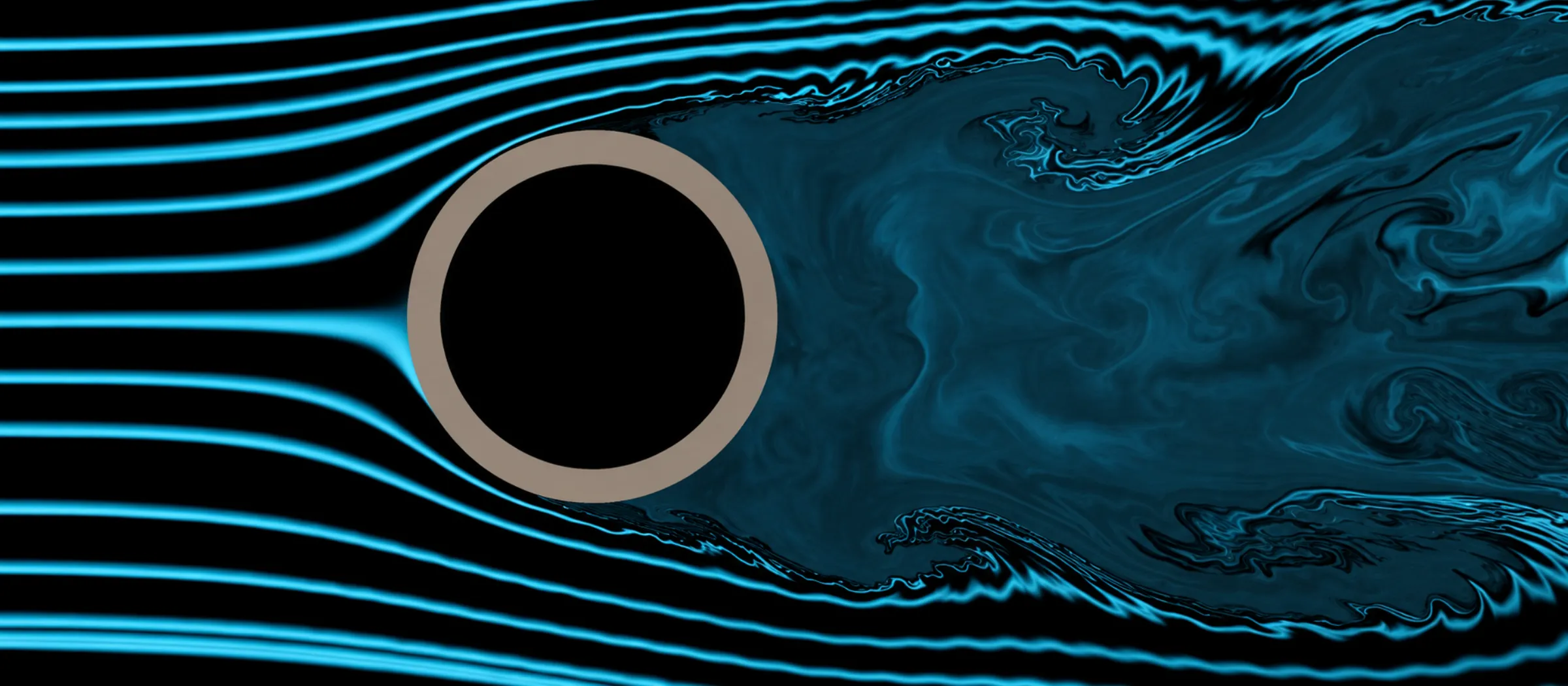
The numerical analysis avoided installing unnecessary mechanisms: none of the five spans requires galloping mitigation.
The Kipreos Inprolec consortium commissioned us to study the galloping effect on the new 2×220 kV Cahuisa - Las Dunas high-voltage line and its Vértice - Yareta branch, belonging to Minera Doña Inés de Collahuasi, in the Atacama Desert (Chile), at altitudes between 2,500 and 3,035 masl. Using empirical formulas, the standard high-voltage line design software had initially identified five spans liable to present the phenomenon; the largest of them, with a tower-to-tower length of 464.5 m.
Galloping consists of a large-amplitude, low-frequency oscillation that the wind induces in conductors with asymmetric ice accumulation, caused by the frequency coupling between the cable's torsional and vertical movements. That severe vertical displacement reduces the distance between conductors arranged in parallel, which causes short circuits; it also produces serious mechanical failures, such as the breakage of anchor bolts, the wear of insulators and even the fracture of the cables. Since the initial analysis is based on simplified empirical methods, which only indicate the theoretical susceptibility of a span, international standards recommend an expert evaluation to determine precisely whether the phenomenon will actually occur.
To address the problem rigorously, a numerical approach was adopted through the finite element modeling of the cables, 32 mm in diameter. The model reproduces the complete stress-strain state, accurately accounting for the three-dimensional movements and the torsional rotation. Six ice configurations were included according to the CIGRE guidelines, with thicknesses from 5 to 55 mm (equivalent to a 100-year return period), evaluating in each scenario the coupling between the conductor's torsional and vertical vibrations across a wide range of wind speeds. A detuning pendulum of aluminum (250 mm arm and a weight of 20 to 22 kg), designed by us, was also analyzed as a standard mitigation measure. The analysis concluded that none of the five spans will present galloping, because the real physical configuration of the line prevents the coupling of critical frequencies. Therefore, no mitigation mechanism needs to be installed, not even the pendulum designed. This advanced engineering study spared the consortium from unnecessarily intervening in an already-built line, with considerable savings in cost and time.
We design, calculate and verify structures in Bolivia and abroad, in person or remotely.
Let's talk about your project